Apparel Industry ERP Solutions
Rapidly Respond to Market Changes,
Lead Fashion Industry Upgrade
TAKAI's Apparel Industry ERP Solution is deeply tailored to the core pain points of the fashion industry: rapid style iterations, complex color-size SKUs, and short product lifecycles. It builds a full-process digital loop from design sampling to production manufacturing to retail terminals. The system supports one-click configuration of style BOM and multi-dimensional size matrix management, achieving seamless connection between design drafts and production processes; Precise production scheduling, linked with dynamic inventory warnings for fabrics, reduces stagnant materials; connects retail end data, provides real-time feedback on best-selling and slow-moving products, helping enterprises quickly respond to market trends. Through full-chain data collaboration, it significantly improves supply chain turnover efficiency, reduces inventory costs, and empowers flexible production and agile operations for apparel companies.
Time-to-market reduced by 35%
Style management efficiency improved by 50%
Inventory accuracy increased to 98%

Common Pain Points in the Apparel Industry & ERP Solutions
Providing comprehensive digital solutions for key pain points in design, production, inventory, and sales for apparel companies
Complex Style, Color, Size Management
Apparel products have numerous styles, each with multiple color and size combinations. Traditional management methods struggle to accurately track inventory and sales for each SKU.
ERP Solution
Professional PCS (Style/Color/Size) management functionality supporting unlimited product structure levels, automatically generating unique codes for each SKU with full lifecycle tracking.
Long Product Time-to-Market, Slow Response
The process from design to production to store shelves is cumbersome, with untimely information flow, leading to long time-to-market and difficulty in quickly responding to market trend changes.
ERP Solution
Connecting design, sampling, procurement, and production processes, achieving real-time data sharing and collaboration through quick response mechanisms to shorten product time-to-market.
Difficult Fabric and Trim Management
Many fabric colors, difficult shade variation control, complex trim varieties, making precise calculation of usage and cost challenging, often resulting in waste or shortages.
ERP Solution
Professional fabric and trim management module supporting batch number management and color variation tracking, precisely calculating usage and losses to optimize procurement and inventory management.
Chaotic Multi-Channel Inventory and Sales Management
Multiple online and offline channels with unsynchronized inventory information, leading to overselling or inventory buildup, unable to achieve unified customer service and marketing management.
ERP Solution
Full-channel inventory and order management, achieving shared online and offline inventory and allocation, unified member management and marketing activities, enhancing cross-channel operational efficiency.
Core Function Modules of Apparel ERP
Full-process management functions specifically built for the apparel industry, covering design, production, procurement, inventory, and sales chains
Design & Technical Management
- Style Design and Management
- Sample Management and Tracking
- Process Route Management
- Bill of Materials (BOM) Management
- Cost Calculation and Pricing
Production & Supply Chain Management
- Order and Production Planning
- Fabric and Trim Management
- Outsourced Processing Management
- Color and Size Management
- Production Progress Tracking
Distribution & Retail Management
- Multi-Channel Order Management
- Store and E-commerce Integration
- Inventory Allocation and Transfer
- Member Management and Analysis
- Retail Analysis and Reports
Inventory & Warehouse Management
- Precise SKU Inventory Management
- Fabric Batch Number and Color Variation Management
- Warehouse Location and Bay Management
- Inbound/Outbound and Inventory Management
- Inventory Alerts and Transfer
Business Analysis & Decision Making
- Sales Trend Analysis
- Style Best-Seller/Slow-Mover Analysis
- Inventory Turnover Rate Analysis
- Cost and Profit Analysis
- Intelligent Replenishment Suggestions
Integration & Extension Functions
- PLM System Integration
- E-commerce Platform Integration
- POS System Integration
- Financial System Integration
- Mobile Application Support
Apparel ERP Implementation Results Data
Based on analysis of 150+ apparel enterprise implementation cases, the actual business improvements brought by ERP systems
Market Launch Cycle Reduction (%)
Style Management Efficiency Improvement (%)
Inventory Cost Reduction (%)
Order Processing Efficiency Improvement (%)
Apparel ERP Implementation Process
Professional implementation methodology tailored to apparel industry characteristics, ensuring rapid system deployment and value creation
Requirements Analysis & Planning
Analyze apparel business processes, clarify PCS management needs, develop implementation plan
System Design & Configuration
Design product structure and processes, configure core functions like PCS management
Data Migration & Testing
Migrate product and inventory data, conduct functional testing and process validation
User Training & Go-Live
Role-based training, develop go-live strategy, execute system cutover
Optimization & Enhancement
Post-launch support, process optimization, business value enhancement
Apparel ERP Client Success Stories
Clients from different apparel sub-sectors have achieved business digital transformation through our ERP solutions

Shanghai Renowned Heritage Undergarment Company
The ERP system is deeply integrated with third-party systems including PLM, MES, WMS, and retail POS, creating an end-to-end digital loop from design to terminal. The PLM system synchronizes new undergarment design drafts, size charts, and process parameters to ERP with one click, automatically generating style BOMs and avoiding manual entry errors; ERP linkage with MES issues production work orders in real-time and receives back production line progress updates, combining precise color and size scheduling to reduce changeover waiting times; After WMS integration, batch and color code information is automatically verified during inbound, inventory accuracy has increased to 98%, and precise distribution to stores is supported; retail POS data is fed back to ERP in real-time, best-seller inventory alerts trigger automatic replenishment, and order delivery cycles are shortened by 35%.
Consult Details
Internationally Renowned Sports Goods Company
Integrating ERP with e-commerce platforms to achieve full-channel inventory sharing and unified order management, This sports goods company has built an agile operation system integrating "Manufacturing - Inventory - Sales" through deep ERP integration with e-commerce platforms, MES, and WMS. On the manufacturing side, ERP and MES systems link in real-time, dynamically adjusting production plans based on full-channel sales data to achieve flexible scheduling of multiple categories such as running shoes and fitness equipment, increasing production response speed by 40%; on inventory, WMS and e-commerce platform inventory data are integrated to establish a full-channel inventory sharing pool, automatically assigning nearby warehouse shipments, improving inventory turnover efficiency by 35% and reducing inventory costs by 30%; on sales, unified order processing and intelligent order assignment across online and offline channels are realized, increasing online order processing efficiency by 50% and avoiding overselling and stockouts.
Consult Details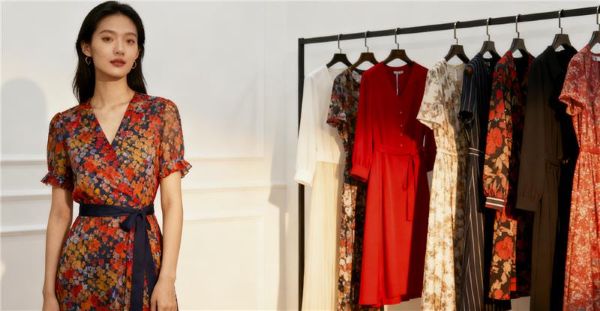
Domestically Renowned Fashion Listed Company
This fashion listed company has deeply integrated manufacturing and sales systems through the ERP system and seamlessly coordinated with third-party systems such as OA, PLM, and WMS, building agile operational capabilities for multi-season, multi-series products. On the manufacturing side, ERP is connected to the PLM system, design drafts, fabric processes, and other data are synchronized with one click to generate production BOMs, combined with multi-dimensional size and color management, shortening the design-to-production cycle by 40%; ERP links retail POS and e-commerce platforms, dynamically adjusts distribution strategies, and significantly improves market response speed. At the system integration level, ERP and OA systems achieve automatic approval flow triggering, closing key processes such as procurement and production online, reducing cross-departmental communication costs; after WMS integration, inventory is precisely controlled by season and series, slow-moving product warnings link promotional strategies, further improving inventory turnover rates.
Consult DetailsGet Apparel Industry ERP Solution Details
Fill out the form on the right, and our apparel ERP experts will contact you within 24 hours to provide customized solution consultation.
Company Address
Suite 34.05 Level 34, Menara Citibank, 165 Jalan Ampang, 50450 Kuala Lumpur, Malaysia
Phone Number
+60 3-2181 5802
info@takai-malaysia.my